
Articles in Incline
 Calculator
Treadmill Incline Calorie Calculator
See how grade changes calorie burn on the same walk or run.
 Guide
0% Incline on a Treadmill: Is the 1% Rule Real?
Using 0% incline on a treadmill is fine for walking and for most easy running. The popular "always set 1%"…
 Guide
12-3-30 Workout Calories Burned: Chart by Body Weight
For most adults, 12-3-30 workout calories burned land between about 240 and 470 per session, and body weight decides almost…
 Guide
Treadmill Incline Percent to Degrees: Chart and Formula
Treadmill incline percent to degrees is a conversion most people get wrong by nearly half: a 10% incline is about…
At 3.5 mph, every 1% of treadmill incline adds about 17 calories to a 30-minute walk for a 154 lb (70 kg) person: roughly 129 calories flat, 213 at 5% and 297 at 10%. To burn 297 calories on a flat belt in the same half hour, that person would have to jog at close to 5 mph.
Incline is the cheapest intensity a treadmill offers. It’s also displayed in a way that confuses most people, because a 10% grade is a 5.7° slope, not 10°.

Table of Contents
Why treadmill incline costs so much more when you walk
The ACSM equations that most calculators use, ours included, charge you for lifting your body up the slope. The walking equation multiplies that vertical work by 1.8; the running equation uses 0.9.
So at 3.5 mph, each extra 1% adds about 13% to a flat walk’s calorie cost, while at 6 mph each 1% adds only about 4% to a flat run. For walkers, treadmill incline is the biggest lever on the machine.
| Incline | Angle | Calories in 30 min (154 lb, 3.5 mph) | vs. flat |
|---|---|---|---|
| 0% | 0° | 129 | — |
| 2% | 1.15° | 162 | +26% |
| 4% | 2.29° | 196 | +52% |
| 6% | 3.43° | 230 | +79% |
| 8% | 4.57° | 264 | +105% |
| 10% | 5.71° | 297 | +131% |
| 12% | 6.84° | 331 | +157% |
| 15% | 8.53° | 382 | +197% |
Treadmill incline guides in this section
Calculator
Treadmill Incline Calorie Calculator
Enter weight, speed, grade and time to see what the incline adds compared with walking flat.
Conversion
Treadmill Incline Percent to Degrees
Grade percent vs. angle, with an exact conversion table and why the two get mixed up.
Workout
12-3-30 Workout: Calories Burned by Body Weight
Calculated calories for 12% incline, 3 mph and 30 minutes, from 110 to 230 lb.
Myth check
Should You Never Use 0% Incline?
Where the “always set 1%” rule comes from, and when it does and doesn’t apply.
Start here
- Put your usual walk into the incline calorie calculator at 0%, then at 3% and 6%, and compare.
- Read incline percent to degrees if you’re matching a hiking trail or a hill.
- Try a few minutes at a steeper grade before committing to 12-3-30.
- Runners: read the 0% incline rule before setting every run to 1%.
Incline walking vs. flat running: equal-calorie settings
A steep walk can match a run for calories, which is the main reason people use treadmill incline instead of speed. The table pairs incline walks with the flat running speed that costs the same, so you can trade impact for grade without losing burn.
| Incline walk | MET | Flat run with the same cost | 30 min at 154 lb | 30 min at 200 lb |
|---|---|---|---|---|
| 3.0 mph, 15% | 9.5 | 5.5 mph | 332 kcal | 431 kcal |
| 3.5 mph, 12% | 9.5 | 5.5 mph | 331 kcal | 430 kcal |
| 4.0 mph, 10% | 9.6 | 5.6 mph | 335 kcal | 435 kcal |
| 4.0 mph, 12% | 10.7 | 6.3 mph | 373 kcal | 485 kcal |
| 3.5 mph, 15% | 10.9 | 6.5 mph | 382 kcal | 496 kcal |
| 4.0 mph, 15% | 12.3 | 7.4 mph | 431 kcal | 560 kcal |
Equal calories don’t mean equal training. Running builds speed and running economy that a walk can’t, and a steep walk loads the calves and Achilles more than a flat run. Use the table to pick a session on calories and impact, not as a swap for race training.
What incline does for runners
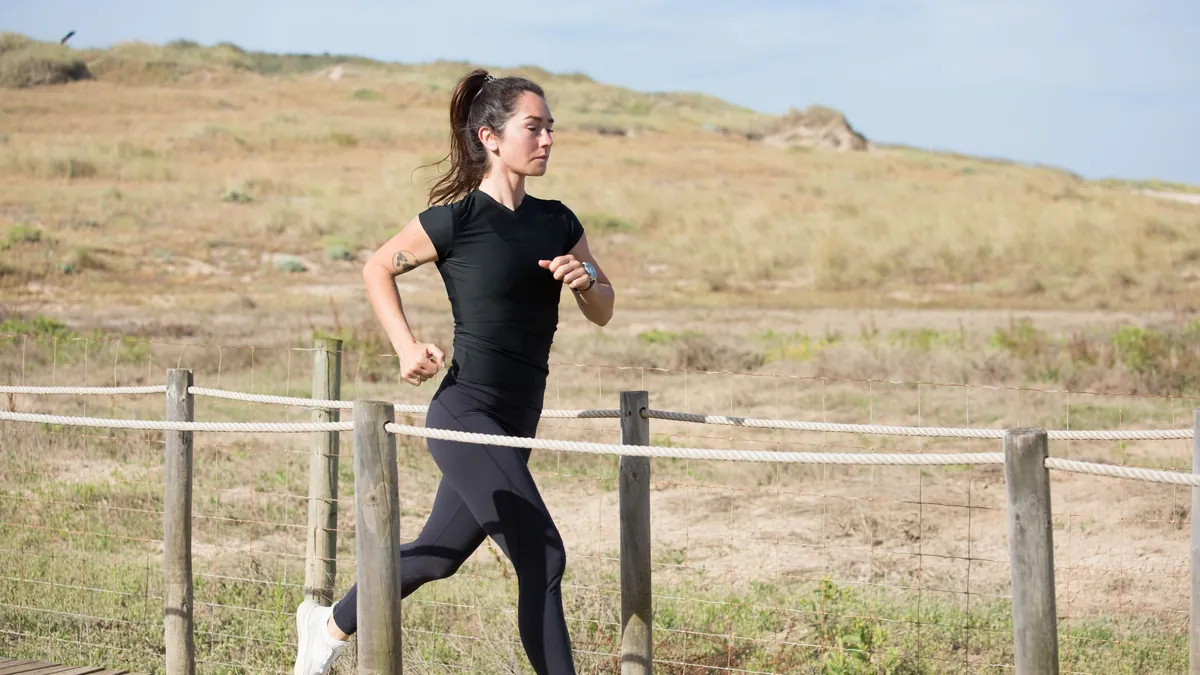
For runners, treadmill incline has a smaller effect in percentage terms, because the running equation’s vertical term is half the walking one. Each 1% adds about 4% to a 6 mph run.
| Incline | MET | Calories | vs. flat |
|---|---|---|---|
| 0% | 10.2 | 356 | — |
| 2% | 11.0 | 385 | +8% |
| 4% | 11.9 | 414 | +16% |
| 6% | 12.7 | 443 | +24% |
| 8% | 13.5 | 472 | +32% |
| 10% | 14.3 | 501 | +41% |
In absolute terms that’s still about 15 calories per 1% per half hour. Hill repeats at 4 to 6% let you use treadmill incline without running the whole session uphill.
The 1% incline rule for runners
Running on a belt is slightly easier than running on the road because you aren’t pushing through air. A frequently cited 1996 study by Jones and Doust tested nine trained male runners and found a 1% grade best matched the oxygen cost of level road running at about 6.5 to 11 mph.
The detail most summaries skip is that at the two slowest speeds tested, about 6.5 and 7.5 mph, road running wasn’t measurably different from 0% either. The 1% setting matters more as you run faster, and for walkers the air-resistance gap is too small to worry about.
Incline and your knees
Slow walking on a treadmill incline can be easier on the knee than fast walking on the flat. In a 2014 study in the Journal of Orthopaedic Research, 9 moderately obese and 10 non-obese adults walked slowly uphill (about 1.7 mph at 6°, roughly a 10.5% grade) and briskly on the level (about 3.4 mph).
Early-stance peak compressive force at the knee was 23% lower in the obese group and 35% lower in the non-obese group during the slow uphill walk. The authors suggested slow uphill walking may suit obese adults at risk of joint problems or pain.
It’s one small lab study, and it compared a slow climb with a fast flat walk rather than equal speeds. Steeper walking also shifts more work to the calves and Achilles, so build the grade gradually.
How much climbing an incline session adds up to
Treadmill incline is rise over distance, so you can turn any session into feet climbed. That’s useful if you’re training for a hike with a known elevation gain.
| Incline | Angle | Rise per mile | Rise in 30 min at 3 mph |
|---|---|---|---|
| 1% | 0.57° | 53 ft | 79 ft |
| 3% | 1.72° | 158 ft | 237 ft |
| 5% | 2.86° | 264 ft | 396 ft |
| 8% | 4.57° | 421 ft | 632 ft |
| 10% | 5.71° | 525 ft | 788 ft |
| 12% | 6.84° | 629 ft | 944 ft |
| 15% | 8.53° | 783 ft | 1,175 ft |
A 12-3-30 session climbs about 940 feet, a solid day hike’s worth of gain packed into half an hour. Our incline percent to degrees page has the full conversion table.
Which grade to use for your goal
| Goal | Grade | Speed | Why it works |
|---|---|---|---|
| Easy or recovery walk | 0 to 2% | 2.5 to 3.5 mph | Keeps effort light to moderate |
| Steady calorie-focused walk | 5 to 8% | 3 to 3.5 mph | Adds about 65 to 105% to a flat walk’s cost at 3.5 mph |
| Hard, low-impact session | 10 to 12% | About 3 mph | Reaches 7 to 8 METs without running |
| Hike preparation | 10 to 15% | 2.5 to 3 mph | Builds the climbing your trail will ask for |
| Road-like running | 1% | 6.5 mph and faster | Best match to level road running in the 1996 study |
| Running strength | 4 to 6% in short repeats | Your easy pace or a little faster | Adds load without a full session uphill |
Common incline mistakes
These habits make treadmill incline feel harder than it is, or burn less than the console says.
- Going steep too soon. Jumping from 0 to 12% is the fastest way to sore calves and shins. Add 1 to 2% at a time.
- Holding the rails to survive the grade. The console still counts the full climb, but your body doesn’t do it. Lower the grade until you can let go.
- Leaning far forward. A slight forward lean from the ankles is normal on a hill. Folding at the hips puts the load on your lower back.
- Skipping the flat warm-up. Five easy minutes at 0 to 1% before you climb makes the first steep minutes feel much better.
- Trusting the number over the feel. Treadmills differ, so 8% on one machine can feel unlike 8% on another if the belt or the calibration differs.
A six-week incline progression
This plan keeps the speed at 3 mph and adds 2% of treadmill incline each week, finishing at the 12-3-30 setting. Hold a week longer if you need the rails to finish it.

| Week | Incline | MET | 154 lb | 200 lb |
|---|---|---|---|---|
| 1 | 2% | 4.1 | 144 kcal | 187 kcal |
| 2 | 4% | 5.0 | 173 kcal | 225 kcal |
| 3 | 6% | 5.8 | 202 kcal | 262 kcal |
| 4 | 8% | 6.6 | 231 kcal | 300 kcal |
| 5 | 10% | 7.4 | 260 kcal | 337 kcal |
| 6 | 12% | 8.3 | 289 kcal | 375 kcal |
By week 4 the session passes 6 METs, the point the CDC uses as the start of vigorous intensity. If week 4 feels much harder than week 3, repeat it before moving on.
What the 12-3-30 study found
12-3-30 is the best-known treadmill incline workout, and the one peer-reviewed study of it we could find appeared in the International Journal of Exercise Science in 2025. It had 16 participants do the workout and a self-paced run matched for total energy. The 12-3-30 session took longer and burned energy at a lower rate, but used a higher share of fat as fuel.
A higher fat share during exercise isn’t the same as more body fat lost over weeks. For that, total calories matter, which is why our 12-3-30 calorie chart focuses on what each session costs at your weight.
Getting more from incline without getting hurt
- Add grade before speed. At walking pace, a couple of percent raises effort faster than a faster belt and keeps impact low.
- Progress gradually. Steep walking puts more work on the calves and Achilles tendons. Add 1 to 2% at a time and slow the belt if your form breaks down.
- Keep your hands off the rails. In a 2014 study, people who leaned back on the handrails at 10% burned about as much as people walking hands-free at 5%. Read about the handrail effect for the full numbers.
- Respect the incline-speed combination. A 12% grade at 3 mph is about 8.3 METs, close to an easy jog. Treat it as a hard session, not a stroll.
Use treadmill incline as a dial, not a switch: small steps up, one change at a time, and hands off the rails.
Net calories: incline matters even more than it looks
The tables above show gross calories. If you plan food or a deficit, the net figure is the one to use, and treadmill incline looks even better in net terms because the resting share stays fixed while the climbing cost grows.
| Grade at 3.5 mph | Gross, 30 min | Net, 30 min | Net, 4 sessions a week | Net vs. flat |
|---|---|---|---|---|
| 0% | 129 | 94 | 375 | 1.0x |
| 5% | 213 | 178 | 712 | 1.9x |
| 10% | 297 | 262 | 1,049 | 2.8x |
| 15% | 382 | 347 | 1,386 | 3.7x |
In gross terms a 10% walk is about 2.3 times a flat one. In net terms it is about 2.8 times. Four half-hour walks at 10% add roughly 1,050 net calories a week, compared with about 375 on the flat, for exactly the same time on the belt.
Treadmill incline for heavier walkers
Calories scale with body weight, so incline pays off even more in absolute terms if you weigh more. Here is a 30-minute walk at 3 mph:
| Body weight | 0% | 5% | 10% |
|---|---|---|---|
| 180 lb (82 kg) | 135 | 219 | 304 |
| 220 lb (100 kg) | 165 | 268 | 371 |
| 260 lb (118 kg) | 195 | 317 | 439 |
A slower pace on a grade can be a better fit than a faster flat walk, and the knee study above points the same way. Start at 2% to 4%, keep the speed comfortable and let the grade do the work. Add 1% at a time once you can finish without touching the rails.
The numbers add up fast. At 260 lb, a 10% walk at 3 mph burns about 439 calories in half an hour, more than a 154 lb person gets from 30 minutes of running at 6 mph.
Related calculators and incline guides
Frequently asked questions
What treadmill incline is best for walking?
There isn’t one best setting. Most people can start at 1 to 3% and build toward 5 to 8% for steady walks, keeping steeper grades such as 10 to 12% for shorter sessions. A grade you can hold without gripping the rails is more useful than a steeper one you have to hang on to.
Is a 10% incline the same as 10 degrees?
No. Treadmill incline is a grade: rise divided by distance, times 100. A 10% grade is about 5.71°.
A true 10° slope would be about a 17.6% grade, which most home treadmills can’t reach.
How many calories does walking on an incline burn?
For a 154 lb person at 3.5 mph for 30 minutes, about 129 calories flat, 213 at 5% and 297 at 10%. The incline calorie calculator works out the figure for your weight and settings.
Is incline walking as good as running?
For calorie burn per minute, a steep walk can come close: 12-3-30 costs about 289 calories for 154 lb, against about 303 for a 30-minute jog at 5 mph. Running builds different fitness and burns more at higher speeds.
Our comparison of incline walking vs. running for fat loss covers the rest.
How much incline equals running?
On calories, about 12% of treadmill incline at 3.5 mph matches a flat 5.5 mph run, and 15% at 3.5 mph matches about 6.5 mph. The equal-calorie table above covers more pairs.
Does decline walking burn fewer calories?
Usually, yes. The 2024 Compendium of Physical Activities lists treadmill walking downhill at minus 3 to 12% and 2.8 to 3.1 mph at 3.3 METs, against 3.8 METs for level treadmill walking at 3.0 to 3.4 mph. Our calculators only model level and uphill treadmill incline.
How much treadmill incline is too much?
Too much is any grade that makes you hold the rails, lean far forward or finish with sore calves for days. Most gym machines stop at 15%. Work up to steep settings over weeks, and drop back 2% if your form breaks down.
Does incline walking count as strength training?
Not really. It works your calves, glutes and hamstrings harder than flat walking, but it is still aerobic exercise. Adult activity guidelines recommend separate muscle-strengthening work on at least two days a week.