
Army height & weight calculator 2026
Current standard is Waist-to-Height Ratio (WHtR). Enter waist and height in the same unit. A ratio under 0.55 meets the standard. The retired AR 600-9 screening table is included below for reference only.
Measure at the navel, end of a relaxed exhale (inches).
Same unit as waist (inches).
Your ratio
Meets standard
Your ratio is below the 0.55 threshold. This is an unofficial estimate — your official WHtR is recorded by trained personnel.
Retired AR 600-9 screening table (reference only)
This table is no longer official Army policy under Army Directive 2026-13 (dated July 1, 2026; announced July 7, 2026). It is kept here so you can compare against the old process. Height is in feet and inches; weight is in pounds.
Enter height and weight, then check the table.
The Army stopped weighing Soldiers against a chart in July 2026. Our Army height and weight calculator now runs the check that replaced the chart: your waist at the navel divided by your height. If the answer is below 0.55, you meet the standard. Age, sex and body weight don't enter the math.
Enter your waist and height in the Army height and weight calculator above to see the ratio the Army now records, and the largest waist that still passes at your height.
That single rule comes from Army Directive 2026-13, dated July 1, 2026 and announced by the Army on July 7, 2026. Enter your waist and height below for your ratio, then use the chart further down to see the largest waist that still passes at your height.
How the Army height and weight calculator works
The Army height and weight calculator divides waist circumference by height. Both numbers must be in the same unit, so inches over inches or centimeters over centimeters. The ratio has no unit, which is why the same 0.55 line works in either system.
A 34-inch waist on a 70-inch (5'10") Soldier gives 34 ÷ 70 = 0.4857. That records as 0.485 and passes with room to spare. A 38.5-inch waist at the same height gives exactly 0.550, which fails.
The directive's wording is precise: the standard is "a WHtR of less than and not equal to 0.55." Exactly 0.550 is a fail, and there is no rounding up in your favor or against you.
DA Form 5500, the worksheet the Army records the measurement on, adds the recording rule. The ratio is kept to three decimal places and anything after the third decimal is dropped, not rounded. So 0.5499 is recorded as 0.549 and passes, while 0.5500 is recorded as 0.550 and fails.
The result panel is an unofficial estimate. Your official ratio is the one a trained team records on DA Form 5500 and enters in the Army Training Information System (ATIS).
What the Army height and weight standards are in 2026
Here is the whole current standard in five lines, taken from Army Directive 2026-13:
- One measure for everyone. Waist-to-height ratio (WHtR) is the only authorized Army Body Composition Program (ABCP) standard. Height and weight screening tables are discontinued.
- One cutoff. Below 0.55 meets the standard. 0.55 or above means a flag and enrollment in the ABCP.
- Twice a year. Every Soldier is measured at least twice per calendar year, and a commander can order an extra check at any time.
- No challenge method. The tape test, DEXA and other body fat methods can't be used to contest a WHtR result.
- No fitness-score exemption. No Army Fitness Test (AFT) score exempts a Soldier. The directive rescinded AD 2025-17, which had tied a body fat exemption to high fitness scores.
It covers the Regular Army, Army National Guard and Army Reserve, plus West Point and Senior ROTC cadets. The directive also says it is "not retroactive," so earlier actions under the old tables aren't reopened by it.
Maximum waist for your height (Army WHtR chart)
Most people searching for an Army height and weight chart want one number: the biggest waist that still passes at their height. The table gives it for heights from 4'10" to 6'8".
The middle column is the exact 0.55 line. The right column is the largest half-inch waist reading that still records below 0.550, which is the practical number if your unit tapes in half-inch steps.
| Height | Waist must be under | Largest passing half-inch waist | Metric (height / waist under) |
|---|---|---|---|
| 4'10" (58 in) | 31.90 in | 31.5 in | 147.3 cm / 81.0 cm |
| 4'11" (59 in) | 32.45 in | 32.0 in | 149.9 cm / 82.4 cm |
| 5'0" (60 in) | 33.00 in | 32.5 in | 152.4 cm / 83.8 cm |
| 5'1" (61 in) | 33.55 in | 33.5 in | 154.9 cm / 85.2 cm |
| 5'2" (62 in) | 34.10 in | 34.0 in | 157.5 cm / 86.6 cm |
| 5'3" (63 in) | 34.65 in | 34.5 in | 160.0 cm / 88.0 cm |
| 5'4" (64 in) | 35.20 in | 35.0 in | 162.6 cm / 89.4 cm |
| 5'5" (65 in) | 35.75 in | 35.5 in | 165.1 cm / 90.8 cm |
| 5'6" (66 in) | 36.30 in | 36.0 in | 167.6 cm / 92.2 cm |
| 5'7" (67 in) | 36.85 in | 36.5 in | 170.2 cm / 93.6 cm |
| 5'8" (68 in) | 37.40 in | 37.0 in | 172.7 cm / 95.0 cm |
| 5'9" (69 in) | 37.95 in | 37.5 in | 175.3 cm / 96.4 cm |
| 5'10" (70 in) | 38.50 in | 38.0 in | 177.8 cm / 97.8 cm |
| 5'11" (71 in) | 39.05 in | 39.0 in | 180.3 cm / 99.2 cm |
| 6'0" (72 in) | 39.60 in | 39.5 in | 182.9 cm / 100.6 cm |
| 6'1" (73 in) | 40.15 in | 40.0 in | 185.4 cm / 102.0 cm |
| 6'2" (74 in) | 40.70 in | 40.5 in | 188.0 cm / 103.4 cm |
| 6'3" (75 in) | 41.25 in | 41.0 in | 190.5 cm / 104.8 cm |
| 6'4" (76 in) | 41.80 in | 41.5 in | 193.0 cm / 106.2 cm |
| 6'5" (77 in) | 42.35 in | 42.0 in | 195.6 cm / 107.6 cm |
| 6'6" (78 in) | 42.90 in | 42.5 in | 198.1 cm / 109.0 cm |
| 6'7" (79 in) | 43.45 in | 43.0 in | 200.7 cm / 110.4 cm |
| 6'8" (80 in) | 44.00 in | 43.5 in | 203.2 cm / 111.8 cm |
We calculated every row from the 0.55 rule, so you can check any of them: multiply your height in inches by 0.55 and your waist has to come in under that number.
Watch the rows where the limit lands on a round half inch. At 5'0" the limit is exactly 33.0 inches, and at 5'10" it is exactly 38.5 inches. A tape reading of 33.0 or 38.5 at those heights produces 0.550, a fail. The GoArmy waist chart lists 33" and 38.5" as the maximum waist for the 5'0"–5'½" and 5'10"–5'10½" ranges. Those figures only pass at the taller end of each range, so at exactly 5'0" or 5'10", treat half an inch less as your real ceiling.
How to measure your waist the way the Army does

The directive and the Army's announcement both specify the navel (belly button) as the measuring point. That's different from the medical convention of measuring midway between the lowest rib and the top of the hip bone, so don't copy a doctor's-office number into this Army height and weight calculator.
- Stand relaxed with your feet together and your arms at your sides.
- Wrap a non-stretch tape around your bare skin at the level of your navel.
- Keep the tape parallel to the floor. Check it in a mirror, because the back tends to drop.
- Breathe out normally and read the tape at the end of that relaxed exhale. Don't suck in or push out.
- The tape should sit flat on the skin without pressing a groove into it.
- Take three readings, round each one down to the nearest half inch and average them. That's how DA Form 5500 records the waist, and the average is the number to enter.
For height, stand in socks against a wall with your heels, buttocks and the back of your head touching it. Lay a flat object on top of your head, mark the wall and measure from the floor.
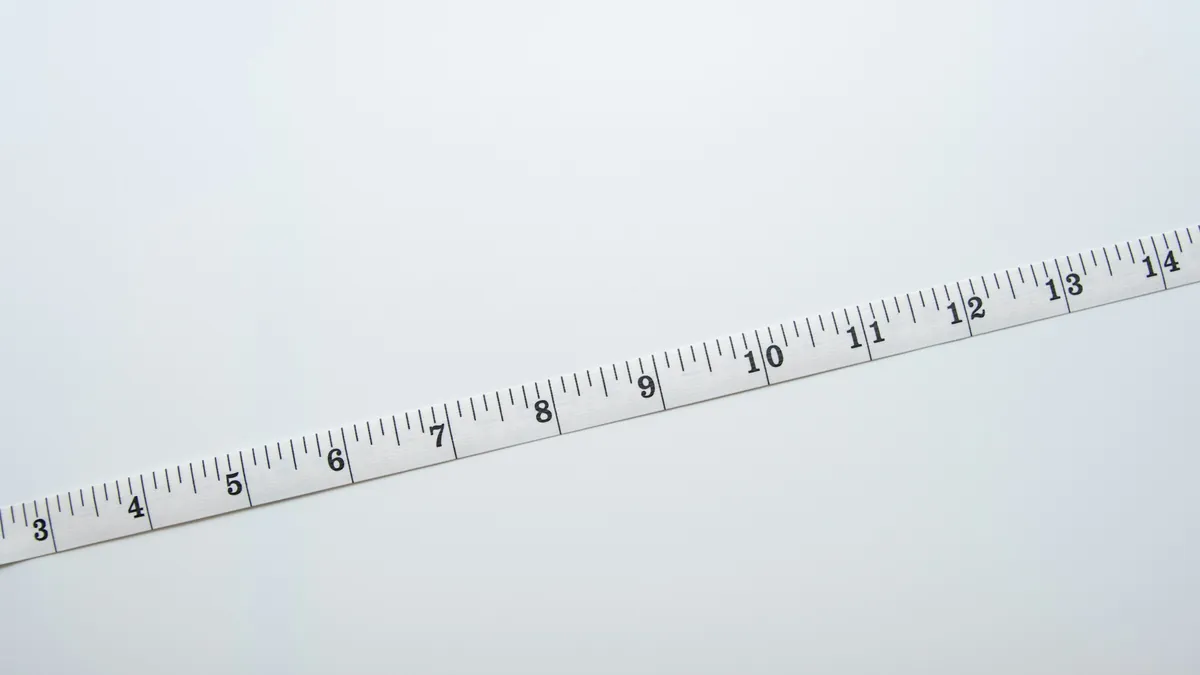
Small errors matter more than people expect. At 5'10", every half inch of waist moves the ratio by about 0.007. A tape slipping down at the back or a slightly held breath can shift a borderline 0.546 to a failing 0.553.
What changed from the old height and weight table

For decades, Army Regulation 600-9 screened Soldiers by weight. You looked up your height, age group and sex in Table B-1. If you weighed more than the screening weight, you were taped, and the tape test decided whether you were within your body fat limit.
| Item | Before July 2026 | Now (AD 2026-13) |
|---|---|---|
| First check | Weight against a height, age and sex table | Waist ÷ height |
| Second check | Circumference tape test for body fat % | None. Same-day confirmation measurement only |
| Age brackets | 17–20, 21–27, 28–39, 40+ | None |
| Separate limits by sex | Yes | No. One 0.55 line |
| Fitness-score exemption | Available under earlier directives | Rescinded |
| Record | DA Form 5500 (men) or 5501 (women) | DA Form 5500 and ATIS. DA Form 5501 rescinded |
The Army height and weight calculator above still includes the old Table B-1 screening check, clearly marked as retired. It's there for comparison only. Passing or failing it says nothing about your current standing.
The old table had a real weakness. It judged weight, and muscle is heavy. A Soldier with a large frame could fail the weight screen and then pass the tape. WHtR targets the thing the Army actually cares about, which is fat carried around the middle.
What happens if your ratio is 0.55 or higher
A failing first reading doesn't trigger anything by itself. The directive requires a confirmation measurement on the same duty day, by a different team, before the commander takes any action.
If the confirmation also comes in at 0.55 or above, the Soldier is flagged and enrolled in the ABCP. Flag code K is non-transferable, so it can hold up reassignment as well as favorable actions such as promotion.
Some of the old program has been simplified:
- Commanders now run the program directly. The requirement to appoint an ABCP noncommissioned officer was rescinded.
- Mandatory monthly assessments and progress targets were rescinded. Commanders decide when to reassess, and a Soldier comes off the program as soon as they meet the standard.
- Regular Army and AGR Soldiers get a commander-requested medical exam after enrollment to rule out an underlying condition. Guard and Reserve Soldiers may request one, at their own expense if not on active duty.
- Units must allow at least 7 days between the AFT (or Combat Field Test) and a WHtR measurement, unless operational needs say otherwise.
On separations, the directive says units may start the paperwork, but no Soldier will be separated for a WHtR failure until Headquarters, Department of the Army finishes a 180-day assessment of the new standard and issues further guidance. The Army's July 7 announcement says the review is meant to validate accuracy and decide whether adjustments are needed.
Key dates for the WHtR rollout
| Date | What happened |
|---|---|
| July 1, 2026 | Army Directive 2026-13 issued, effective immediately |
| July 7, 2026 | Army Public Affairs announces the change on army.mil |
| About late September 2026 | Deadline for every Soldier's WHtR to be recorded in ATIS (90 days from the directive date) |
| About late December 2026 | 180 days from the directive date. The Army hasn't published a fixed end date for its assessment |
Two things are still open. The directive gives Army G-1 two years to write these rules into AR 600-9 and AR 600-8-2, and the directive itself is rescinded once those revised regulations publish.
Separately, the Department of War reissued DoW Instruction 1308.03 effective August 31, 2026. It sets 0.55 as the upper WHtR limit for every service but also calls for a body fat calculation when a member is at or above that line. As of November 16, 2026, the Army hasn't changed AD 2026-13, which still bars any secondary method. If that changes after the 180-day review, this page and the Army height and weight calculator will change with it.
If you're joining the Army
Recruits are on the same ratio. The Army's GoArmy requirements page says the previous height and weight requirements "have been replaced with a waist-to-height ratio (WHtR) standard," with the waist measured at the navel and divided by height in inches, and a ratio below 0.55 meeting the standard.
Medical accession standards are a separate rulebook, and recruiters handle waivers and programs such as the Future Soldier Preparatory Course. Use the Army height and weight calculator to know where you stand before you walk in, and confirm anything that affects your contract with your recruiter.
How to bring your ratio down safely
Your height is fixed, so the only lever is your waist. Abdominal fat responds to the same things as fat anywhere else: a steady calorie deficit, enough protein, strength training and sleep. Spot exercises like crunches won't target the waistline on their own.
A deficit of 500 calories a day is a common, sustainable starting point. Our treadmill calorie deficit calculator shows how much of that a walking or running routine can cover, and the incline calorie calculator shows why a steep walk often beats a flat jog for burn per minute. If you're starting from scratch, the beginner treadmill plan builds volume without beating up your joints.
Skip the last-minute tricks. Sweat suits, fasting and dehydration before a measurement might shave a fraction of an inch for a day, they don't change your ratio, and they carry real health risk. Re-measure under the same conditions every couple of weeks and judge the trend, not one reading.
If you want to run the check again later, the Army height and weight calculator above will still use the same AD 2026-13 rule.
A tape at the navel and a measured height are the only inputs the Army height and weight calculator needs; body weight, age and sex do not change the 0.55 standard.
If your unit still talks about screening tables, point them to the Army height and weight calculator and to Army Directive 2026-13, which retired those tables on July 1, 2026.
The Army height and weight calculator will not tell you a body fat percentage, because the Army no longer uses one as the standard.
Keep a copy of your last passing waist if you use the Army height and weight calculator to track a cut, because the ratio is recorded to three decimals.
Related calculators and guides
Army height and weight calculator FAQ
Does the Army still use height and weight tables in 2026?
No. Army Directive 2026-13 discontinued the height and weight screening tables on July 1, 2026. Waist-to-height ratio is now the only Army body composition standard.
What waist-to-height ratio do I need to pass?
Below 0.55. The Army records the ratio to three decimals without rounding, so 0.549 passes and 0.550 fails.
Do age and gender change the Army WHtR standard?
No. There are no age brackets and no separate limits for men and women. Everyone is held to the same 0.55 line.
Where exactly is the waist measured?
At the navel, with the tape level and snug against bare skin, read at the end of a normal breath out.
Can a tape test or DEXA scan overturn a failed WHtR?
No. The directive says no secondary or supplemental body composition method, including the circumference tape test, can be used to challenge a WHtR result.
Does a high AFT score exempt me?
No. The directive states that no AFT score exempts a Soldier from the WHtR standard and rescinded the previous fitness-score exemption.
How often will I be measured?
At least twice per calendar year. A commander can also order a WHtR check at any time if they think a Soldier may not meet the standard.
Is this the same standard the Navy uses?
The 0.55 idea is similar, but the Navy's process is different: Sailors at 0.55 or higher go on to a body fat step with limits of 26% for men and 36% for women. See our US Navy body fat calculator for how that works.
How we checked this page
The Treadmill Calorie Calculator team checked this page against the text of Army Directive 2026-13, the army.mil announcement of July 7, 2026, DA Form 5500 and the GoArmy requirements page on November 16, 2026. The waist chart is our own arithmetic from the 0.55 rule. See our methodology for how we build and test each calculator.
This Army height and weight calculator is an independent reference tool. It isn't affiliated with or endorsed by the U.S. Army or the Department of War, and it isn't medical advice. Your unit's recorded measurement is the one that counts.