
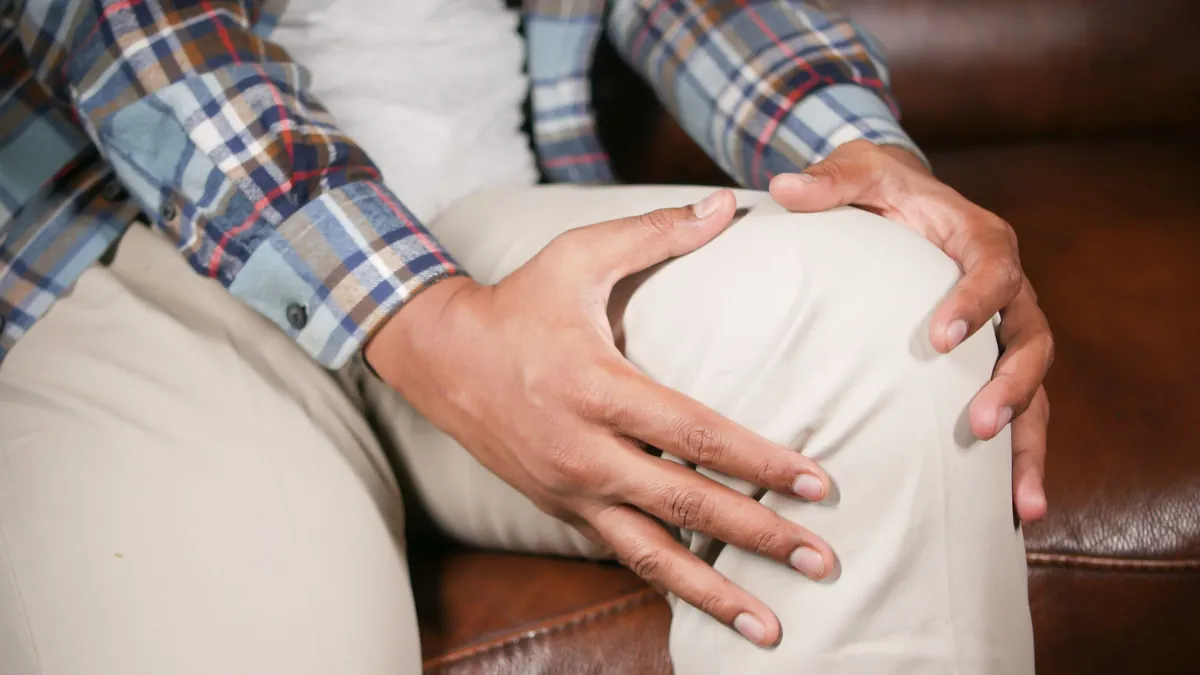
Is treadmill bad for knees? For most people, no. Walking or running on a treadmill puts about the same load on your knees as doing it outdoors, and some studies find slightly lower joint forces on the belt. Large reviews show recreational runners actually have less hip and knee arthritis than people who do not run. Knee trouble on a treadmill usually comes from how it is used: too much too soon, long steep declines, overstriding, worn shoes or weak thigh and hip muscles.
So, is treadmill bad for knees? The studies below say the belt is not uniquely harsh; trouble usually comes from a jump in load or from walking downhill for too long.
There is even a knee-friendly trick built into the machine. In one lab study, walking slowly uphill cut early-stance knee force by about a quarter in adults with obesity compared with brisk level walking, and by the ACSM equation the slow climb also burns more calories. This article is general information, not medical advice. If you have a knee injury, swelling, locking or pain that does not settle, see a doctor or physiotherapist before starting or changing an exercise plan.
Table of Contents
Is treadmill bad for knees? The short answer
| Situation | Is it bad for your knees? |
|---|---|
| Walking at a comfortable pace | No. Walking is recommended even for knee arthritis |
| Recreational running, built up gradually | No. Linked with lower arthritis rates than not running |
| Slow walking on a moderate incline | Often easier on the knee than brisk flat walking |
| Long or steep decline settings | Can aggravate the front of the knee |
| Sudden jumps in distance, speed or incline | The most common cause of overuse pain |
| Existing injury or severe arthritis | Possibly; get a tailored plan first |
Treadmill vs outdoor: how knee loading compares
Running
A 2020 meta-analysis in Sports Medicine by Van Hooren and colleagues pooled studies comparing treadmill and overground running. It concluded that the two are largely comparable biomechanically, and knee joint moments were not meaningfully different. In other words, your knee does roughly the same job on the belt as on the road. Many treadmill decks flex slightly, which can feel softer than concrete, but you should not expect a dramatic difference.
Walking
For walkers, the evidence leans a little in the treadmill’s favor. A 2024 meta-analysis in the Journal of Sports Sciences, covering 55 studies and about 1,000 participants, found that treadmill walking produced lower knee and ankle joint moments and lower push-off forces than walking over ground. The differences were modest, but they point the same way: a treadmill is not harder on your knees than the pavement.
Why some people still feel worse on a treadmill
If your knees ache on the belt but not outside, look at these first:
- An identical stride for 45 minutes. Outdoors, turns, curbs and slight slopes vary the load. On a flat belt the same tissues work in exactly the same way, stride after stride.
- Overstriding. Reaching forward to “keep up” with the belt lands your foot ahead of your knee and adds braking force.
- Speed set too high. The belt does not slow down when you tire. Outdoors, you naturally ease off.
- Worn shoes. Cushioning breaks down long before the uppers look tired.
- Zoning out. A screen and a playlist make it easy to go much longer than planned.
Is running bad for your knees in the long run?
The best evidence says recreational running is not. A 2017 systematic review and meta-analysis in the Journal of Orthopaedic & Sports Physical Therapy pooled data on more than 114,000 people:
| Group | Hip or knee arthritis |
|---|---|
| Recreational runners | 3.5% |
| Sedentary non-runners | 10.2% |
| Competitive or elite runners | 13.3% |
The authors could not prove cause and effect, and earlier injuries may explain part of the higher rate in elite runners. But the pattern is clear: being sedentary and very high-volume competitive running were both linked with more arthritis, while everyday running was linked with less. The U.S. Physical Activity Guidelines say much the same: very high levels of high-impact activity in elite athletes carry extra risk, mostly through sports injuries.
Long-term overuse problems to watch for
The treadmill does not cause special injuries, but steady, repetitive training can bring on the usual overuse conditions if you increase too fast:
- Patellofemoral pain (runner’s knee). An ache around or behind the kneecap, often worse on stairs, squatting or after sitting.
- Iliotibial band syndrome. Pain on the outside of the knee, common in runners who add distance quickly.
- Patellar tendon pain. Pain just below the kneecap, often linked to hills, jumping or sudden jumps in training.
If pain changes how you walk, comes with swelling, or keeps getting worse, stop and get it checked.
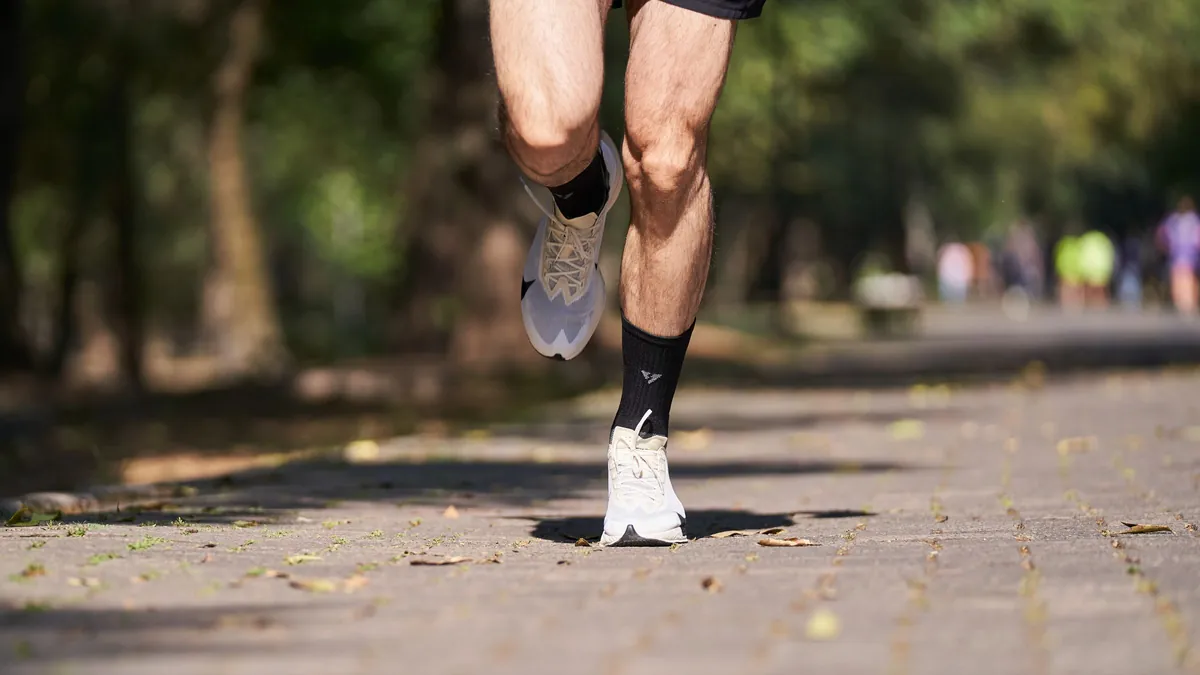

Is incline on a treadmill bad for knees?
Walking uphill: often kinder than you think
This surprises many people. A study in the Journal of Orthopaedic Research compared slow uphill walking (about 1.7 mph at a 6 degree slope, roughly 10.5% grade) with brisk level walking (about 3.4 mph) on an instrumented treadmill. Peak knee compressive force in early stance dropped by 23% in adults with obesity and 35% in adults without, during the slow uphill walk. The authors suggested slow uphill walking may be a good option for people with obesity who are at risk of joint pain.
It also burns more. Using the ACSM walking equation, a 154 lb (70 kg) person walking 30 minutes would burn about 166 calories at 1.7 mph and 10.5% incline, against about 126 calories at 3.4 mph flat. You can compare your own settings with our incline calorie calculator or see the popular 12-3-30 workout numbers. A few cautions: start with a lower incline than you think you need, keep your hands off the rails (see our handrail page), and back off if the front of the knee hurts on steep settings.
Running uphill
Running on an incline has a similar logic, as your stride shortens and your foot lands under you. It is harder work for the calves and Achilles tendon, so build it up slowly.
Decline settings
Some treadmills offer a negative incline. Walking or running downhill makes your thigh muscles work as brakes, which raises the load on the front of the knee and is a common trigger of next-day soreness. If your knees are sensitive, skip decline settings or keep them short and gentle.
Is a treadmill bad for knee arthritis?
No, and for most people it is one of the better options. The U.S. Physical Activity Guidelines state that 150 minutes a week of moderate activity plus muscle strengthening improves pain, function and quality of life in knee and hip osteoarthritis, and that walking up to 10,000 steps a day does not appear to worsen knee osteoarthritis. Walking is listed among the recommended low-impact activities. A treadmill adds a few advantages for arthritic knees: a flat, predictable surface, rails within reach for balance if you need them, control over speed, and no weather. To use it well:
- Begin with short sessions at an easy pace and add time before speed.
- Try a small incline instead of a faster speed if you want more effort.
- Use a pain guide. Scotland’s NHS inform advice on knee osteoarthritis exercise suggests keeping pain during exercise at 5 out of 10 or lower, and says pain should be no worse the morning after.
- Ask your doctor or physiotherapist for a plan if you have severe arthritis, a recent replacement or an injury.
What people commonly report online
Search “is treadmill bad for knees reddit” and the same themes come up again and again in running and fitness forums. Many people say treadmill walking helped them stay active through knee pain. Others describe flare-ups after adding speed, distance or incline too quickly. Shorter strides, newer shoes and strength work are the fixes mentioned most often. Those are personal experiences, not clinical evidence, but they line up well with the research above.
Treadmill knee pain: what to do
Right away
- Stop the session or slow to an easy walk that does not hurt.
- Rest the knee from whatever triggered it for a few days, while staying active in ways that do not hurt.
- Use ice or a cold pack for short spells if it is sore and swollen.
Over the next few weeks
- Return gradually: shorter sessions, lower speed, a modest incline instead of extra speed.
- Shorten your stride and let your foot land under your hips.
- Replace worn shoes.
- Strengthen the muscles that protect the knee: thighs, hips and calves. Simple sit-to-stands, step-ups and bridges are common starting points, and a physiotherapist can tailor them.
When to see a doctor
See a doctor or physiotherapist if you notice swelling, the knee locks, catches or gives way, you cannot put weight on it, pain wakes you at night, or it is not improving after a couple of weeks of easier training. Seek urgent care after a fall or twist with sudden swelling.
How to use a treadmill without hurting your knees (7 habits)
- Warm up with five minutes of easy walking.
- Build gradually. Increase one thing at a time: time, then speed or incline. Our beginner treadmill plan does this week by week.
- Stand tall near the middle of the belt, not hugging the console.
- Choose incline over speed when you want more effort and your knees prefer walking.
- Avoid long decline stretches if the front of your knee is sensitive.
- Mix it up with outdoor walks, cycling or swimming during the week.
- Strength train twice a week. The Physical Activity Guidelines recommend muscle strengthening on 2 or more days.
New to the machine? Start with how to use a treadmill for beginners and our list of common treadmill mistakes.
Treadmill or outdoors for bad knees?
Both are fine for most people, and the best choice is the one you can do comfortably and often. The treadmill wins on predictability, incline control and weather. Outdoors wins on variety, which spreads the load. Mixing the two is a good plan. If you are deciding which to use for weight loss, see treadmill vs walking outside, and for runners, treadmill vs outdoor running calories.
If you came here asking is treadmill bad for knees, the research below is more reassuring than gym folklore, as long as you progress gradually.
The question is treadmill bad for knees comes up most often after a jump in mileage, a steep decline, or a return from time off.
Lab work on joint load is one reason the answer to is treadmill bad for knees is usually no for walking and moderate running.
If pain is already present, is treadmill bad for knees becomes a medical question, and the studies on this page are not a substitute for that visit.
Slow uphill walking, discussed below, is one option people consider when they ask is treadmill bad for knees and still want a useful calorie burn.
Worn shoes and a sudden increase in downhill walking are two practical reasons a session can hurt even if the answer to is treadmill bad for knees is generally no.
People with existing knee osteoarthritis sometimes ask is treadmill bad for knees because they want a controlled surface; that is a decision to make with a clinician.
Related guides for safer treadmill use
Frequently asked questions
Is walking on a treadmill bad for your knees?
No. Treadmill walking loads the knee about the same as, or slightly less than, walking outside, and walking is recommended for knee arthritis.
Is it better to walk or run on a treadmill for knee health?
Walking is gentler and the safer start if your knees are sore. Recreational running is not linked with knee damage in healthy people, but build up gradually.
Can a treadmill cause knee arthritis?
There is no evidence that treadmill use causes arthritis. Recreational runners show lower arthritis rates than sedentary people.
How much incline is safe for sensitive knees?
Many people are comfortable starting at 1% to 5% at a slow pace. In one study, slow walking at about 10% incline lowered peak knee force compared with brisk flat walking, but build up slowly and stop if the front of the knee hurts.
Why do my knees hurt after using the treadmill?
The usual causes are sudden increases in time, speed or incline, overstriding, worn shoes, long decline settings and weak hip and thigh muscles.
Is treadmill bad for knees if you are overweight?
Not usually, and it can be a good choice. Extra body weight does raise knee forces, but in the Journal of Orthopaedic Research study, slow uphill walking cut early-stance knee force by 23% in adults with obesity compared with brisk flat walking. Start slowly and build up.
Is a treadmill better than the road for bad knees?
It is at least as good. The belt is even and predictable, and you control speed and incline. Variety from outdoor walks also helps.